

Ozempic and Your Pelvic Floor: What Weight Loss Medications Are Really Doing Down There
TLDR;
Weight loss medications like Ozempic, Wegovy, and Mounjaro can genuinely help your body, but your pelvic floor is along for the ride whether you prepared it or not. Muscle loss, slowed digestion, rapid fat changes, and dehydration all create real pelvic floor consequences. The medication isn't the problem. The body changes are. And that's exactly what pelvic floor PT is built to address.
Ozempic and Your Pelvic Floor: What Weight Loss Medications Are Really Doing Down There
I got invited to speak at the ASMBS Annual Conference, one of the largest bariatric surgery conferences in the country, and I’ll be honest: I was shocked. A few years ago, that room wouldn’t have thought to invite anyone from the pelvic floor world. But pelvic health awareness is shifting fast, and I was up on stage teaching weight-loss surgeons about the pelvic floor.
We covered a lot of ground. But the topic that kept coming up, the one I keep thinking about, was GLP-1 medications and what they’re doing to pelvic floor health. According to FAIR Health, GLP-1 prescriptions for weight loss rose 587% between 2019 and 2024, with the number of people using them without a diabetes diagnosis jumping nearly 1,961% in that same period. That’s an enormous number of people making significant body changes, and most of them have never heard the words “pelvic floor PT.”
That needs to change. So let’s talk about it.
What GLP-1 Medications Actually Do
GLP-1 stands for glucagon-like peptide-1, a hormone your body already makes naturally. These medications (semaglutide under the brand names Ozempic and Wegovy, tirzepatide as Mounjaro) mimic that hormone to suppress appetite, slow gastric emptying, regulate blood sugar, and help the body lose weight. They work. For a lot of people, they work really well.
As of late 2025, about 1 in 8 US adults reported currently using a GLP-1 medication, and projections estimate around 25 million Americans will be on these drugs by 2030. That’s not a trend. That’s a permanent shift in how weight loss is managed in this country.
What we’re not talking about enough is what happens to the pelvic floor during that shift.
The Good Stuff First (Yes, There Is Good Stuff)
I’m not here to scare you off your medication. There are genuine benefits to GLP-1-assisted weight loss that directly support pelvic floor health.
Weight loss reduces the downward load on your pelvic floor. Less pressure means less strain on those muscles, ligaments, and fascia every time you move, cough, or sneeze. For women dealing with stress incontinence or pelvic organ prolapse, this can be a meaningful improvement. If you’re not sure whether women’s pelvic floor therapy applies to what you’re experiencing, that’s exactly where to start.
Improved insulin sensitivity matters too, especially for women with PCOS, Hashimoto’s, or endometriosis. Reduced systemic inflammation, which GLP-1s can support, means less inflammatory load on pelvic floor tissue that may already be sensitized. And some early evidence suggests GLP-1s can support fertility, which is significant for a lot of the women we see at UpLift.
So the medication category is not the enemy. What happens during the weight loss process is where it gets complicated.
Your pelvic floor isn’t reacting to the GLP-1 itself. It’s responding to every body change that comes with it. Most of those changes are manageable with the right support.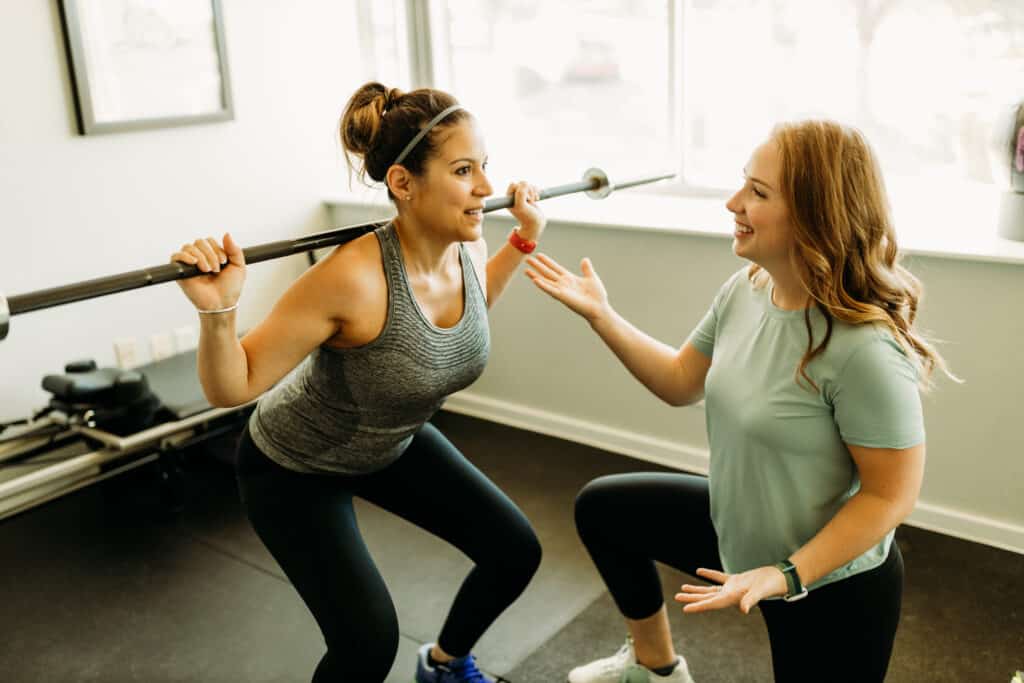
The Part Nobody Is Warning You About
Here’s where I spend most of my time with patients who are on these medications.
Muscle loss is real and it hits the pelvic floor. A 2025 systematic review of over 2,200 research participants found that roughly 25% of total weight lost on GLP-1s came from lean mass, including muscle. Your pelvic floor is muscle. When you lose muscle systemically, you lose it there too. A weaker pelvic floor means less support for your bladder, bowel, and uterus.

Image used with permission from Pelvic Guru®, LLC as a member of the Global Pelvic Health Alliance Membership (GPHAM).
Under-fueling compounds it. These medications suppress appetite significantly. Many people aren’t eating enough protein to preserve muscle mass, which accelerates the lean tissue loss. Fatigue from under-fueling also reduces how much strength work people are doing, which is exactly when they need it most.
Constipation is a bigger problem than people expect. GLP-1s slow gut motility, meaning everything moves through your digestive system more slowly. For a lot of women, that means constipation. Constipation means straining. Straining puts significant downward pressure on your pelvic floor with every attempt to go. Done repeatedly, this creates tension, dysfunction, and sometimes pain that builds quietly over weeks.
Tailbone pain is a specific consequence I’m seeing more of. Rapid muscle loss changes the pressure distribution when you sit. Add in constipation and straining, and you’ve created a perfect recipe for pelvic floor tension that refers to the tailbone. Women are showing up confused about why their tailbone hurts. That is often why.
And then there’s “Ozempic Vagina.” It’s not a formal medical diagnosis yet, but it’s a real pattern. Healthline describes it as sagging vulvar tissue, vaginal dryness, changes in sensation, and discomfort with intimacy, all driven by rapid fat loss in the labia majora, muscle depletion, dehydration, and shifts in estrogen support. Our vaginal tissue loves estrogen, and fat tissue is part of how we maintain local estrogen levels. When fat disappears quickly, that support shifts too.
None of this is inevitable. But it’s happening to people who were never told to expect it, which means they’re not doing anything to prevent or address it.
5 Things a Pelvic Floor PT Would Tell You to Do Right Now
These are the same recommendations I give patients in the clinic. They’re not complicated, but they make a significant difference.

Prioritize protein at every meal. Protein is what preserves muscle mass when you’re in a calorie deficit. Aim for at least 0.7–1g per pound of body weight daily. If your appetite is suppressed, protein shakes count. Getting enough protein is non-negotiable if protecting your pelvic floor matters to you.
Lift weights, even light ones. Strength training is the only intervention that directly preserves and rebuilds muscle during weight loss. You don’t need to be in a CrossFit gym. Bodyweight squats, resistance bands, and light dumbbells all count. The goal is to send a signal to your body that it needs to keep the muscle it has.
Get serious about bowel health. Constipation management isn’t just a comfort issue. It’s a pelvic floor issue. Hydration, fiber, magnesium, and movement all help keep things moving. If you’re straining regularly, read up on how constipation affects your pelvic floor — and know that pelvic floor PT can address it directly. We make pooping easier. That’s part of the job.
Learn how to coordinate your pelvic floor. Most people think pelvic floor work is about squeezing (Kegels). But your pelvic floor needs to contract AND relax appropriately. A pelvic floor PT assesses both. Tension and weakness can coexist, and treating the wrong one makes things worse. Not sure what to expect at pelvic floor PT? That guide breaks it down.
Drink more water than you think you need. GLP-1s can affect thirst cues, and vaginal dryness is often a hydration issue as much as anything else. If you’re under-hydrating, your pelvic floor tissue, bowel function, and vaginal tissue all feel it.
When to See a Pelvic Floor PT
You don’t have to wait for symptoms to get bad before coming in. A lot of the women I see are coming in proactively because they’re starting a GLP-1 and want to stay ahead of it. That’s the smartest approach. If you’re in San Antonio, pelvic floor physical therapy in San Antonio is available at both UpLift locations with no referral needed.
Come in if you’re experiencing any of the following:
- Leaking when you cough, sneeze, laugh, or exercise

- Constipation or straining that isn’t resolving with diet changes
- Tailbone or pelvic pain, especially when sitting
- Vaginal dryness, discomfort with sex, or changes in sensation
- A feeling of pelvic heaviness or pressure
And come in before symptoms start if you want to protect your muscle coordination and bowel health while the rest of your body is going through big changes. That’s what we’re here for.
San Antonio Women: Your Pelvic Floor Deserves Support Too
If you’re on a GLP-1 medication and want to make sure your pelvic floor is keeping up with everything else, we’d love to talk. UpLift has two San Antonio locations, Central Airport (8818 Tradeway Street) and Northwest La Cantera (5500 UTSA Blvd, Suite 250), with eight doctorate-level pelvic floor PTs on staff. No prior auth. No visit caps. No fighting an insurance company for the care your body needs.
Start with a free discovery call. No commitment, no pressure. Just a real conversation with someone who has spent the last several years helping San Antonio women navigate exactly this kind of thing.
Frequently Asked Questions
Does Ozempic directly damage the pelvic floor?
Ozempic and other GLP-1 medications don’t directly damage pelvic floor tissue. The changes happen as a result of what the medication does to your body: muscle loss, slowed bowel motility, fat redistribution, and appetite suppression that can lead to under-fueling. Addressing those changes proactively protects your pelvic floor.
What is "Ozempic vagina" and is it reversible?
“Ozempic vagina” refers to vulvar tissue changes: sagging, dryness, loss of sensation, and discomfort with intimacy, that some women notice during rapid GLP-1-assisted weight loss. It’s caused by rapid fat loss in the vulvar area, muscle depletion, dehydration, and shifts in estrogen support. Many of these changes can be addressed with pelvic floor PT, topical estrogen, vaginal lubricants, and improved hydration and protein intake.
Can I do pelvic floor exercises on my own while taking GLP-1 medications?
Kegels are a start, but they address only one part of pelvic floor function: contraction. Your pelvic floor also needs to relax fully, coordinate with your breath and core, and respond appropriately to movement and pressure changes. A pelvic floor PT assesses all of this and creates a program specific to what your floor actually needs, which is often not just more squeezing.
Why am I constipated on Ozempic and what does that have to do with my pelvic floor?
GLP-1 medications slow gastric emptying and reduce gut motility, which means stool moves through your system more slowly. That leads to harder, drier stool and the urge to strain. Repeated straining puts significant downward pressure on your pelvic floor muscles and can create tension, dysfunction, and pain over time, including tailbone pain. Addressing the constipation directly is a pelvic floor health intervention.
Should I stop taking GLP-1 medications because of pelvic floor concerns?
No. The goal is to support your pelvic floor through the changes your body is going through, not to avoid the medication. Weight loss itself has real pelvic floor benefits, including reduced pressure and improved insulin sensitivity. With the right support, including protein, strength training, hydration, and pelvic floor PT, most of the side effects are manageable.
How soon should I see a pelvic floor PT after starting a GLP-1 medication?
Ideally, before you start noticing symptoms, or within the first few months of starting the medication. The earlier you establish baseline pelvic floor function and start protecting muscle coordination, the better positioned you are as your body changes. If symptoms are already present, it’s never too late to start.