C-Section Recovery: A Week-by-Week Guide to Healing Fully
TLDR;
C-section recovery takes about six weeks for your incision to close, but your core and pelvic floor often need three months or longer to fully heal. Cesarean delivery still affects your pelvic floor even though the vaginal canal was never involved, and untreated dysfunction can last for years without the right care. Ask most women when C-section recovery ends, and they'll tell you six weeks. That's when the incision closes. That's when the OB clears you at the postpartum visit. That's when everyone stops asking how you're doing. But ask the women who are two, five, or fifteen years past their C-section whether their body ever fully caught up, and you'll get a different answer. Leaking. Pelvic pressure. A core that never quite came back. A scar that still pulls when they twist. None of that means something went wrong. It means recovery from a C-section is bigger than incision care, and most of the standard advice stops long before the job is done.
Understanding Your C-Section Recovery Timeline
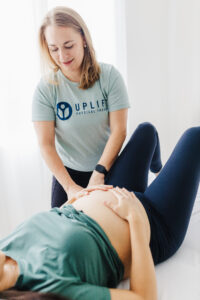
Your C-section incision is a surgical wound, not a scrape. Treat it that way and the rest of recovery goes faster.
Pain typically starts easing within 2 to 3 days, though the incision area can stay sensitive for 3 to 4 weeks. Your OB may prescribe pain medication to get you through the first stretch, and using it on schedule, not just when pain spikes, keeps you moving instead of guarding your abdomen. Mayo Clinic notes that most incisions are fully healed by around six weeks, though the deeper muscle and connective tissue layers keep remodeling for months after that. Postoperative guidelines from the Enhanced Recovery After Surgery Society, updated in 2025, point to early mobility and structured pain control, not just bed rest, as the two biggest drivers of a faster recovery.
Incision care that matters:
- Clean the area gently with warm, soapy water and pat dry, don’t scrub
- Skip baths, hot tubs, and swimming until your incision is fully closed
- Hold a pillow against your incision when you cough, sneeze, or laugh, the counter-pressure cuts the pain noticeably
- Watch for increased redness, warmth, swelling, fever, or drainage, and call your OB the same day if you see any of it
- Let tape strips fall off on their own instead of picking at them
Your body also went through nine months of pregnancy changes that don’t disappear just because you didn’t deliver vaginally. You’ll still have lochia, the postpartum vaginal discharge that usually lasts 4 to 6 weeks and shifts from bright red to pink-brown to yellowish white as your uterus sheds its lining. Your uterus is also still contracting back down to size, which is why cramping, especially during breastfeeding, is normal for the first several days.
Breast engorgement and nipple soreness show up whether or not you’re breastfeeding, because your body doesn’t know your feeding plan, it just knows you delivered. Swelling in your legs, around your incision, or in the vulvar area is common too, and it typically eases over 2 to 4 weeks.
The Recovery Challenges Unique to a C-Section
Vaginal birth and C-section share plenty of overlap, but a few things are specific to surgical delivery, and most postpartum guides skip them.
Lifting restrictions. Skip anything heavier than 10 to 15 pounds for the first few weeks. That’s not arbitrary, it protects the incision and the abdominal muscles underneath while they’re at their weakest. Yes, that includes the infant car seat with the baby in it.
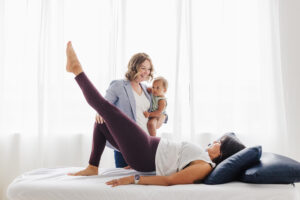
Core weakness. Your surgeon cut through abdominal muscle to reach your uterus, so your core starts recovery already compromised, on top of the diastasis recti, or abdominal separation, that pregnancy causes in nearly every woman regardless of delivery method. A cross-sectional study in Frontiers in Medicine found cesarean delivery
linked to a wider inter-recti distance than vaginal delivery, and separate research tracking long-term postpartum diastasis puts cesarean delivery’s odds ratio at 3.48, more than triple the baseline risk. If your core still doesn’t feel stable months later, pelvic floor therapy for diastasis recti is built for exactly this overlap. A post-surgical abdominal binder can help with stability and pain in the early weeks too. Check your incision underneath it daily, wash it every two days, and plan to wean off it by around week six.
Abdominal swelling. Swelling around the incision is common, and if you notice pooling or excess fluid underneath it, gentle compression or manual lymphatic drainage can help. This is exactly what Dr. Amber Weinheimer, our lymphatic specialist, treats every week.
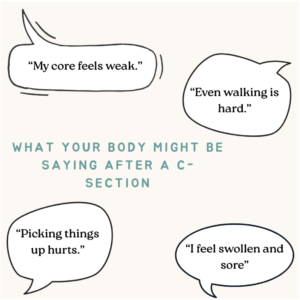
Movement limitations. Getting out of bed, standing from a chair, even walking to the bathroom can feel harder than it should in the first days. That’s the combination of incision tenderness and a core that isn’t firing the way it used to, not a sign you’re doing something wrong.
Common Postpartum Symptoms After Any Delivery
Some of what you’re feeling has nothing to do with the surgery itself, it’s just postpartum.
Constipation is extremely common after a C-section, often from pain medication, reduced movement, or fear of straining the incision. Hemorrhoids can follow from that same straining. Night sweats and temporary hair loss are hormonal, and both typically resolve within a couple of months. The sheer exhaustion of climbing stairs or carrying a laundry basket is a mix of sleep loss, surgical recovery, and muscles that haven’t caught back up yet, not a sign you’re out of shape.

Mild mood swings and crying spells are common as hormones readjust. If sadness, hopelessness, or trouble bonding with your baby stick around or feel severe, that’s worth a call to your provider. It’s common, and it’s also treatable, so please don’t sit with it alone.
If any of this sounds like your recovery so far, you don’t have to figure it out on your own. A pelvic floor evaluation can tell you exactly what your body needs next.
Supporting Your Recovery: What Helps
Rest isn’t a luxury after major abdominal surgery, it’s part of the treatment plan. Eat enough, especially protein, since that’s what your incision uses to rebuild tissue. Aim for roughly 80 ounces of water a day, or 128 ounces if you’re breastfeeding.
To keep constipation from becoming its own problem, use a squatty potty, stay ahead of it with stool softeners, fluids, and fiber, and practice diaphragmatic breathing so you’re not bearing down on a fresh incision. If you’re nursing, prop yourself and the baby with pillows, alternate warm compresses before feeding with cool ones after, and don’t underestimate a well-fitting supportive bra.
Scar massage, once your incision is fully closed, at least six weeks and cleared by your physician, with no scabbing, opening, or pain at the site, can meaningfully improve how your scar moves and feels.

Image used with permission from Pelvic Guru®, LLC as a member of the Global Pelvic Health Alliance Membership (GPHAM).
Your Return to Movement: A Week-by-Week Timeline
This is the part most C-section recovery advice rushes through, and it’s where a lot of women either push too hard or hold back longer than they need to.
Weeks 2 to 4. Start with 10 to 15 minute walks if you feel ready, increasing only as tolerated. Focus on diaphragmatic breathing, easy stretches, and gentle pelvic floor activ
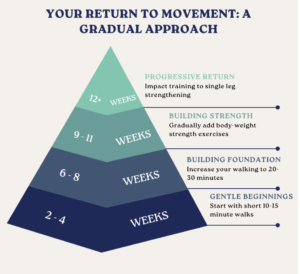
ation, pelvic tilts and light Kegels, holding under 5 seconds, are enough for now.
Weeks 6 to 8. Once your incision is fully healed and your physician clears you, extend walks to 20 to 30 minutes and add the abdominal draw-in maneuver, gently drawing your belly button toward your spine, in a few different positions. Light resistance work on your back, side, or hands and knees, bridges, pillow squeezes, clam shells, arm lifts, builds core and hip strength without overloading the incision.
Weeks 9 to 11. Add body-weight lower body work: squats, lunges, side lunges. Start gently twisting and stretching through your abdomen to help your scar heal with flexibility instead of stiffness.
12 weeks and beyond. Most women can progress to single-leg strengthening, then dynamic movement like plyometrics a few weeks after that, if it feels right. Hold off on running, sports, and high-im
pact activity until your abdomen, pelvic floor, hips, and back all feel strong, not just healed enough to attempt it.
Watch for pain, urinary or fecal leakage, pelvic or abdominal pressure, or ongoing fatigue and weakness as you progress. Those aren’t signs to push through, they’re signs your body needs more support before you go harder.
Why C-Section Recovery Still Needs Pelvic Floor Care
Here’s the misconception we hear most: if the vaginal canal wasn’t involved, the pelvic floor must be fine. It isn’t automatic protection.
Your pelvic floor muscles supported a full-term pregnancy for nine months regardless of how you delivered, and a 2024 cross-sectional study in PLOS One found cesarean delivery is associated with higher rates of abnormal resting muscle tone compared to vaginal delivery. In plain terms, a pelvic floor can come out of a C-section overly tight rather than weak. Pair that with a core that’s been surgically compromised, and the pelvic floor often ends up doing extra work it wasn’t built to do alone.
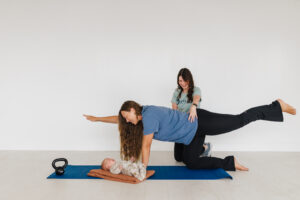 That shows up as:
- Urinary incontinence or urgency
- Pelvic pressure or heaviness
- Pain with sex
- Lower back pain from core weakness
- Trouble with posture, stability, or getting back to exercise safely
If pain with sex is on that list, our pelvic floor therapy for painful sex guide walks through exactly how we treat it.
Real patients tell us this constantly.
“I was never embarrassed or uncomfortable, and learned how to help my body work better, even 15 years after my last c-section. She taught me how to train my body so I wasn’t always racing to the restroom.” Angelica G, Google Review
“Dr. Erin and the rest of the team are amazing. After a few sessions I noticed improvements in core and back pain. She also worked with me post birth on my csection scar.” Madeline R, Google review
Fifteen years is not too late to start. Neither is fifteen weeks.
How Pelvic Floor Physical Therapy Changes C-Section Recovery

A pelvic floor physical therapist who understands surgical recovery treats both halves of the problem, the incision and scar tissue, and the pregnancy-related changes underneath it.
A thorough evaluation covers:
- Your C-section scar, surrounding tissue mobility, and core function
- Pelvic floor muscle strength, tone, and coordination
- Posture and a safe, individualized progression back to the activities you want to return to
Rachel Carbone, one of our postpartum physical therapy in San Antonio specialists, has treated C-section patients on exactly this combination. One patient, Maude McBride, put it this way in her review:
“Rachel Carbone has been awesome and very informative. She has helped me with C-Section recovery and many other issues I had no idea were connected to the pelvic floor.” Maude M, Google review
Scar tissue management is a bigger deal than most people realize. Restricted scar tissue can pull on surrounding structures and contribute to ongoing back pain, digestive complaints, and movement limitations that plenty of women just accept as their new normal. It doesn’t have to be. We treat scar restriction the same way we’d treat it after any other abdominal surgery, including tummy tuck recovery, because the tissue doesn’t know the difference between the two procedures.
Results follow. Kelsey came to us for help getting back to her normal life after her second C-section. In her words:
“I went in for help getting back to my normal life and activities after my second c-section. Before 4 months, I am running, lifting, and playing with my two babies with no pain!” Kelsey W, Google review
That’s not a guarantee for every patient, recovery timelines vary, but it’s what’s possible with the right plan.
When to Seek Professional Help
You don’t need to wait for a problem to become unmanageable before asking for help. Consider a pelvic floor evaluation if you notice:
- Persistent pain at or around your incision site
- Urinary leakage, urgency, or trouble getting back to exercise
- Ongoing back pain, postural changes, or a core that still feels unstable
Early intervention changes outcomes. Addressing a minor scar restriction or mild core weakness at 8 weeks postpartum is a very different conversation than addressing it at 8 years,
even though both are treatable. UPMC’s overview of C-section and pelvic floor health backs the same point: cesarean delivery doesn’t remove the need for pelvic floor attention, it just delays when people realize they need it.
Getting Started With UpLift
Book an evaluation. One session tells you exactly what’s going on with your scar, your core, and your pelvic floor, not a generic guess.
Bring your OB clearance. If you’re within your first six weeks, we’ll coordinate around your postpartum checkup.
Get a plan built around your goals, whether that’s running again, lifting weights, or just picking up your toddler without wincing.
Start before it feels urgent. You don’t need a crisis to justify care. Recovery is the point, not just damage control.
As a private pay vs. insurance PT practice, we build your plan around what you need, not what an authorization allows.

Your Next Step
C-section recovery is bigger than six weeks and a healed incision. Your core, your scar tissue, and your pelvic floor all need attention that most standard postpartum care doesn’t cover.
If you’re weeks, months, or years past your C-section and still dealing with leaking, pain, or a core that doesn’t feel like yours, a pregnancy and postpartum pelvic floor therapy evaluation is the place to start. It’s one appointment, and it tells you exactly what your body needs next.
Book your evaluation and stop guessing about what’s normal.
Frequently Asked Questions
How long does C-section recovery take?
Your incision typically closes within six weeks, but your core and pelvic floor often need three months or longer to fully recover. Deeper tissue healing and strength rebuilding continue well past your six-week checkup, even when everything looks fine on the outside.
Can a C-section affect my pelvic floor if I never delivered vaginally?
Yes. Your pelvic floor supported a full-term pregnancy regardless of delivery method, and research shows cesarean delivery is linked to a pelvic floor that comes out overly tight rather than weak. Combined with core muscles that were surgically compromised, this can cause leaking, pain with sex, or pelvic pressure years later.
When can I start exercising after a C-section?
Gentle walking and pelvic floor activation can typically start around weeks 2 to 4 if you feel ready. More structured core and strength work usually begins around weeks 6 to 8, once your physician clears you, with a gradual return to higher-impact activity by 12 weeks or later.
What does C-section scar tissue massage do, and when can I start?
Scar massage helps restore mobility to tissue that can otherwise restrict movement, posture, and even digestion. Wait until your incision is fully healed, at least six weeks and cleared by your physician, with no scabbing, opening, or pain at the site, before starting.
Is numbness around my C-section scar normal?
Yes. Surgeons cut through small sensory nerves during the procedure, and sensation can take 12 to 18 months to return, if it fully returns at all. Lingering patchy numbness is common and usually not a sign of a problem on its own.
When should I see a pelvic floor physical therapist after a C-section?
Anytime you notice leaking, pelvic pressure, pain with sex, ongoing back pain, or a core that doesn’t feel stable, regardless of how long ago you delivered. Earlier evaluation generally means a faster, fuller recovery, but it is never too late to start.